
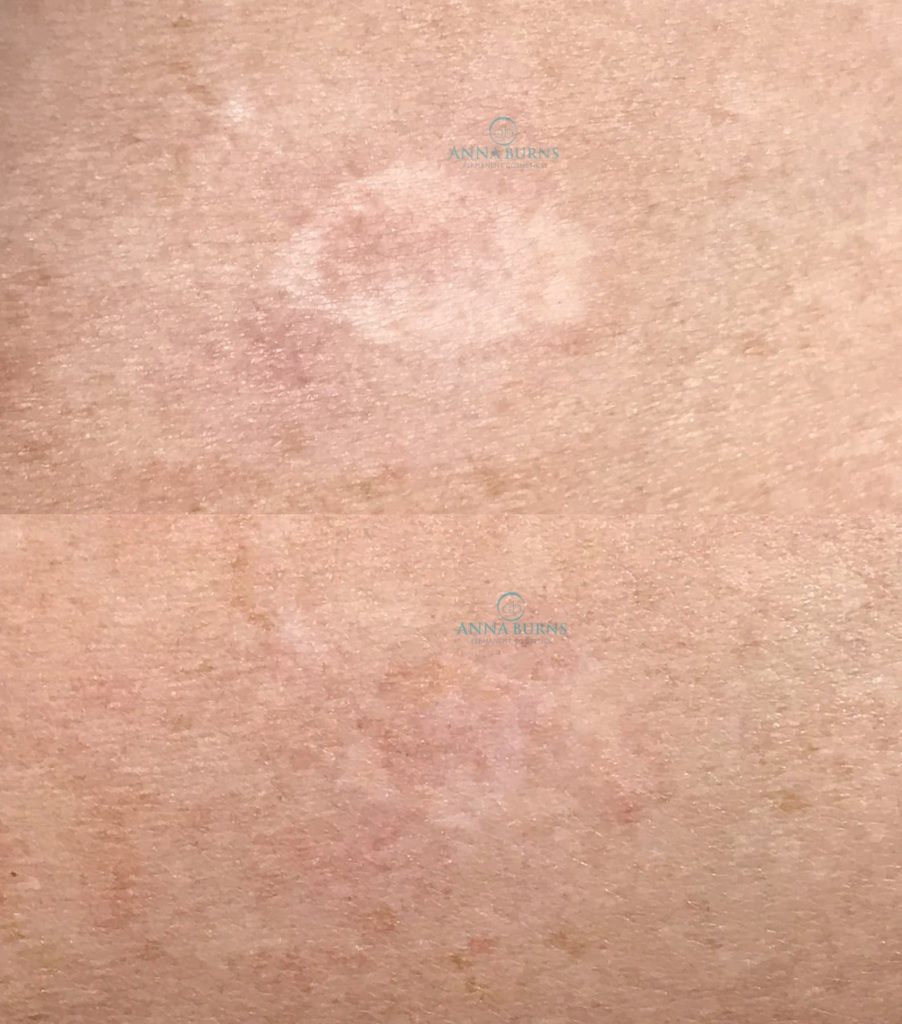
If you have been living with a scar that catches your eye every time you pass a mirror, you have probably wondered whether anything can actually make it less visible. Scar camouflage, a specialized form of paramedical tattooing, can do exactly that for the right kind of scar. But not every scar qualifies, and knowing the difference before you book a consultation can save you money, time, and the disappointment of being turned away.
This guide walks through every scar type camouflage can help with, the ones it cannot, a simple self assessment to see where yours falls, honest cost expectations for the Atlanta market, and how to pick an affordable expert led provider.
Key Takeaways
- Scar camouflage works best on scars that are at least 12 months old, flat, stable in color, and lighter than the surrounding skin.
- Surgical, trauma, burn, stretch mark, self harm, and flat acne scars are the most common candidates. Keloid and raised hypertrophic scars are not.
- Results are typically improved appearance and last around 2 to 5 years before touch-ups.
- Expect a multiple session process starting with a patch test, spaced 6 to 8 weeks apart.
- Transparent pricing plus financing options.
What Is Scar Camouflage, in Plain Terms?
Scar camouflage is a paramedical tattooing technique that deposits custom blended, skin tone pigment into a healed scar so the scar blends more evenly with the surrounding skin. You will also see it called Corrective Pigment Camouflage (CPC), scar micropigmentation, scar blending tattoo, or skin tone tattoo for scars.
Here is the honest reality upfront. Camouflage reduces visibility. It does not erase an old scar. Because the pigment is semi permanent, results generally last between 2 and 5 years before touch ups are needed, depending on sun exposure, skincare habits, and how quickly your skin cells turn over.
Scar camouflage vs. cover up tattoo vs. scar revision
These three options get confused constantly, so it helps to line them up.
- Scar camouflage tattoo. Uses flesh tone pigment to visually blend the scar with surrounding skin. The scar’s texture is unchanged. Only its color contrast is reduced.
- Decorative cover up tattoo. A traditional artistic tattoo drawn over the scar. It hides the scar under a design rather than blending it.
- Scar revision (laser, microneedling, or surgical). Actively changes the scar’s texture, often by stimulating collagen or removing tissue. This is a medical treatment, not a color match.
Camouflage is usually the last step in a scar journey, used after any texture work is complete and the scar has fully stabilized.
The Two Ways to Classify Scars (Why It Matters for Candidacy)
Before you can answer whether your scar can be camouflaged, you need to know that scars are classified two different ways, and both matter.
The first is by medical type, which describes the scar’s physical structure:
- Atrophic. Depressed below the skin surface. Most acne scars, chickenpox scars, and some surgical scars fall here.
- Hypertrophic. Raised, but stays within the original wound border.
- Keloid. Raised and grows beyond the original wound border, often continuing to expand over time.
- Contracture. Tightened, pulled scars that commonly follow burns and can restrict movement.
The second is by origin. This includes surgical, traumatic, acne, stretch mark, burn, self harm, and so on. Origin explains how the scar happened. Medical type explains what it looks and feels like now.
Camouflage suitability depends mostly on medical type, color, and maturity, not on origin. A C section scar and a burn scar can both be excellent candidates as long as they are flat, mature, and lighter than surrounding skin. Meanwhile, two acne scars on the same face can have very different outcomes if one is a flat post inflammatory patch and the other is a deep ice pick pit.
Scars That Can Be Camouflaged
A scar is generally a strong camouflage candidate when it meets four conditions. It is at least 12 months old, flat and smooth, lighter than the surrounding skin (hypopigmented), and stable in color. The origins that most often meet those conditions include the following.
Surgical scars
These are the most common reason people seek camouflage. C section scars, tummy tucks (abdominoplasty), mastectomy and breast reconstruction incisions, breast augmentation and reduction scars, facelift lines, liposuction entry points, Mohs surgery scars, orthopedic surgery scars, gender affirming surgery scars, and skin graft borders can all be candidates once fully healed and pale.
Trauma and injury scars
Cuts, lacerations, dog bites, and accident scars from car, sports, or workplace injuries are all treatable once mature. The key is again color and texture. The story of how the scar happened does not affect suitability.
Burn scars (mature and flat)
Thermal, chemical, and radiation burn scars can be camouflaged once they have healed to a smooth surface. If burn scars remain thick or have lost too much elasticity, pigment may not settle properly, so a consultation is essential to evaluate individual burn scars.
Stretch marks (silver or white, mature)
Stretch marks are technically a type of atrophic scar. They can be camouflaged on the abdomen, hips, thighs, and breasts, but only after they have matured to a silver or white color. Newer red or purple stretch marks are still changing and are not yet ready for camouflage work.
Acne scars (flat or superficial only)
Flat post inflammatory hypopigmentation from acne can respond well to camouflage. Deeper pitted acne scars, including the ice pick, boxcar, and rolling varieties, usually need texture focused treatment first (microneedling, laser, or fillers) before camouflage becomes appropriate.
Self harm scars
This is one of the most common and most personal reasons people seek camouflage. Reputable paramedical tattoo studios handle these with complete discretion and no judgment. If this is your situation, know that many artists specialize in this specific work and treat it as a meaningful step in a longer healing journey.
Vitiligo (stable patches only)
Vitiligo is not a scar in the traditional sense, but it produces the same underlying issue. Patches of skin without pigment. Camouflage can help when the vitiligo is stable and not actively spreading. Active or unstable vitiligo is not a candidate.
Congenital marks and reconstructive scars
Cleft palate repair scars, hypopigmented birthmarks, and areola scars from breast reconstruction after mastectomy are also common candidates. Areola repigmentation, in particular, is a specialized subset of scar camouflage that can be part of restoration following mastectomy.
Scars That Cannot Be Camouflaged
Some scars either do not respond well to pigment or can actively be made worse by it. Here is when camouflage is off the table.
- Keloid scars. These are raised, thick scars that grow beyond the original wound border. Tattooing a keloid can trigger further keloid growth, so it is a firm no from reputable artists.
- Hypertrophic (raised) scars. Pigment does not settle evenly on raised tissue, so the result will not blend the way you want. Some studios recommend scar revision or microneedling first to flatten the scar before camouflage becomes an option.
- Scars less than 12 months old. Fresh scars are still changing in both color and texture. Working on them prematurely can cause additional damage and unpredictable healed color.
- Dark or hyperpigmented scars. Standard camouflage cannot lighten a scar that is darker than the surrounding skin. Some studios offer a separate technique called “dark scar neutralization” for these cases, while others may recommend laser or chemical treatments first.
- Scars with dark borders (post inflammatory hyperpigmentation). If your scar has a darker ring around it, often called PIH, camouflage tattooing can sometimes make the ring wider or darker, and the risk is higher on darker skin tones.
- Active skin conditions on the area. Eczema, psoriasis, active acne, or any current irritation on the treatment area disqualifies the scar until the skin is calm and clear.
Medical conditions that disqualify treatment
Beyond the scar itself, several health conditions rule you out, at least temporarily. Reputable studios will decline treatment if you are:
- Pregnant or breastfeeding
- Currently undergoing chemotherapy
- Using Accutane or have used it within the past year
- Diagnosed with hemophilia or a bleeding disorder
- Have active herpes simplex (cold sores) in the treatment area, unless on preventive antiviral medication
- Immunocompromised or a recent organ transplant recipient
- Fitted with a pacemaker or diagnosed with a major heart condition
If any of these apply, the answer is not “never.” It is “not right now.” Most conditions have a clearance window, and a good practitioner will explain when you can revisit the option.
How Do You Know if YOUR Scar Qualifies? A Self Assessment Framework
Before you book a consultation, run through these five questions. If you answer yes to the first four and no to the fifth, you are likely a candidate.
- Is your scar at least 12 months old? Fresh scars are still healing and changing. Twelve months is the widely accepted minimum for stable results.
- Is it flat and smooth? Run your finger over it. If it is raised, camouflage is not the right first step. You may need scar revision first.
- Is it lighter than the skin around it? Look at the scar under natural light and compare to nearby healthy skin. Camouflage adds color to areas that have lost it. It does not remove color.
- Is the surrounding skin free of active rashes, acne, eczema, or open wounds? The treatment area needs to be calm and healthy.
- Are you currently on Accutane, chemotherapy, blood thinners, or pregnant? If yes, this is a “not right now” answer. Reschedule for after clearance.
The one step you should not skip: the spot color (patch) test
Even if you pass the self assessment, a reputable artist will require a spot color test, sometimes called a patch test, before your first full session. A small pea sized area is tattooed with a candidate pigment blend and left to heal for 4 to 8 weeks. Because the final healed color depends on your individual skin chemistry, the patch test is the only reliable way to preview how the pigment will actually settle.
If a provider offers to skip the patch test to speed things up, that is a red flag, not a bonus.
What Does Scar Camouflage Cost in Atlanta?
Scar camouflage pricing in the Atlanta market varies by studio, scar size, and complexity, but here is a realistic range based on what leading Atlanta paramedical tattoo providers currently charge.
- Face and body scar camouflage sessions typically run between $400 and $500 per session across most established Atlanta studios, with larger or more complex scars pricing upward from there. Anna Burns Permanent Cosmetics starts sessions at $3500 for standard face and body camouflage.
- Patch tests are usually billed separately in Atlanta. Expect anywhere from $100 to $300 for the initial patch test session depending on the studio.
Because scar camouflage is a multiple session process, most Atlanta patients need 2 to 4 sessions to reach the final result. Your total investment in the Atlanta market usually lands somewhere between $1,000 and $3,500 for face and body scar work, and can climb higher for large scalp or full body areas.
What “affordable” should actually mean in Atlanta
Chasing the lowest per session price is almost always the wrong instinct here. Poorly done camouflage is very hard to undo, and every touch up adds cost. The genuinely affordable Atlanta providers share a different set of traits.
- Transparent, published pricing. You should know the patch test fee and per session rate before you book.
- Financing options. Payment plans or third party financing make expert level treatment accessible without a lump sum.
- Included consultations. A real consultation should not cost extra.
- No hidden touch up fees. Clear policy on what future sessions will cost.
- Realistic expectation setting. An artist who tells you the 70 to 80 percent improvement truth is one worth trusting.
What’s the Best Affordable Permanent Makeup Place for Scar Camouflage?
For patients in and around Atlanta, Anna Burns Permanent Cosmetics is a strong “affordable, expert led” pick. Here is what makes the studio stand out on both counts.
- Paramedical specialization, not general PMU. Scar camouflage is treated as a core discipline, not a side offering next to eyebrow microblading. Anna Burns handles acne, burn, C section, plastic surgery, post surgical, and self harm scar camouflage all as part of her focused paramedical practice.
- Financing available. Payment plans mean you do not have to choose between expert level work and your budget. That is a genuine accessibility advantage over many boutique providers.
- Full complementary service menu. If your case turns out to need scar revision first, areola re pigmentation, or scalp micropigmentation (SMP), it is all under one roof. No need to shop across multiple providers.
- Discretion for sensitive cases. Self harm and post mastectomy patients are treated with the privacy and care the work demands.
What to look for in any scar camouflage provider
If you are shopping around the Atlanta market or beyond, apply this same lens wherever you go.
- Paramedical or medical tattoo training credentials. Not just a general PMU certificate.
- A portfolio of healed results. Fresh session photos look dramatic but do not show the true outcome. Ask for photos taken 6 to 8 weeks after treatment.
- Mandatory consultation and patch test protocol. Anyone who skips this step is cutting a corner that matters.
- Sterile disposable setup and medical grade sanitation. Single use needles, new pigment cups, hospital grade disinfection.
- Realistic expectation setting. The phrase you want to hear is “significant improvement,” not “complete erasure.”
What to Expect During and After Treatment
A typical scar camouflage session runs 60 to 120 minutes. The artist uses different needle sizes based on the scar’s size and shape, depositing pigment into the upper dermis. Topical anesthetic may be applied for comfort, though many clients tolerate the procedure without it.
Immediately afterward, the treated area looks dark and appears red or inflamed. That inflammation typically settles in 2 to 3 days. The dark surface pigment sheds over the following week as your skin heals, and the true healed color emerges over 6 to 8 weeks.
Key aftercare rules:
- No wet shaving on the treated area for 10 days.
- Avoid sun exposure and tanning while healing, and use sunscreen consistently long term.
- Skip retinol, glycolic acid, and alpha hydroxy products on the area.
- Follow your artist’s specific aftercare instructions to the letter.
Sessions are spaced 6 to 8 weeks apart to allow full healing and color stabilization before the next round of pigment is added.
Longevity and touch ups
Scar camouflage tattoos typically last 2 to 5 years before touch ups are needed. The single biggest factor in longevity is UV exposure. Pigment particles break down in sunlight, so consistent sunscreen use is the difference between a five year result and a two year one.
Frequently Asked Questions
How long do scar camouflage tattoos last?
On average, results last between 2 and 5 years. Sun exposure is the largest fade factor, followed by exfoliating skincare products (retinols, AHAs) applied to the treated area.
Does scar camouflage hurt?
Most clients describe it as mild to moderate discomfort, comparable to a light tattoo sensation. Topical numbing is available and is used at the artist’s discretion, though many procedures are completed without it.
Can scar camouflage be done on darker skin tones?
Yes, but with important caveats. Post inflammatory hyperpigmentation risk is higher on darker skin, and scars with dark borders may become more visible after treatment rather than less. Choose an artist experienced with your specific skin tone and expect a more conservative first pass.
How old does a scar need to be for camouflage?
At least 12 months, with stable color and no continued texture change. Newer scars are still healing and can react unpredictably to pigment.
Can scar camouflage be removed if I do not like the result?
Yes. Saline tattoo removal can lift pigment out of the skin over multiple sessions. This is another reason to choose an experienced artist the first time. Corrections are possible but add cost and time.
Bringing It All Together
If you have made it this far, you probably already know whether your scar is a likely candidate. The quick test still applies. Is it at least a year old, flat, and lighter than the skin around it? If yes, camouflage tattooing can realistically achieve a 70 to 80 percent improvement in visibility that lasts several years.
The two things that most affect your outcome are not the technique itself. They are your provider’s expertise and your own patience through the multiple session process. Skipping the patch test, chasing the cheapest per session price, or expecting instant erasure are the three most common ways this treatment disappoints people.
For patients in the Atlanta area, or anyone willing to travel for a specialist, Anna Burns Permanent Cosmetics offers transparent pricing, financing, and paramedical focused expertise across the full range of scar types this guide covers. If that fits what you are looking for, book a consultation to find out whether your scar qualifies and what your specific treatment plan would look like.